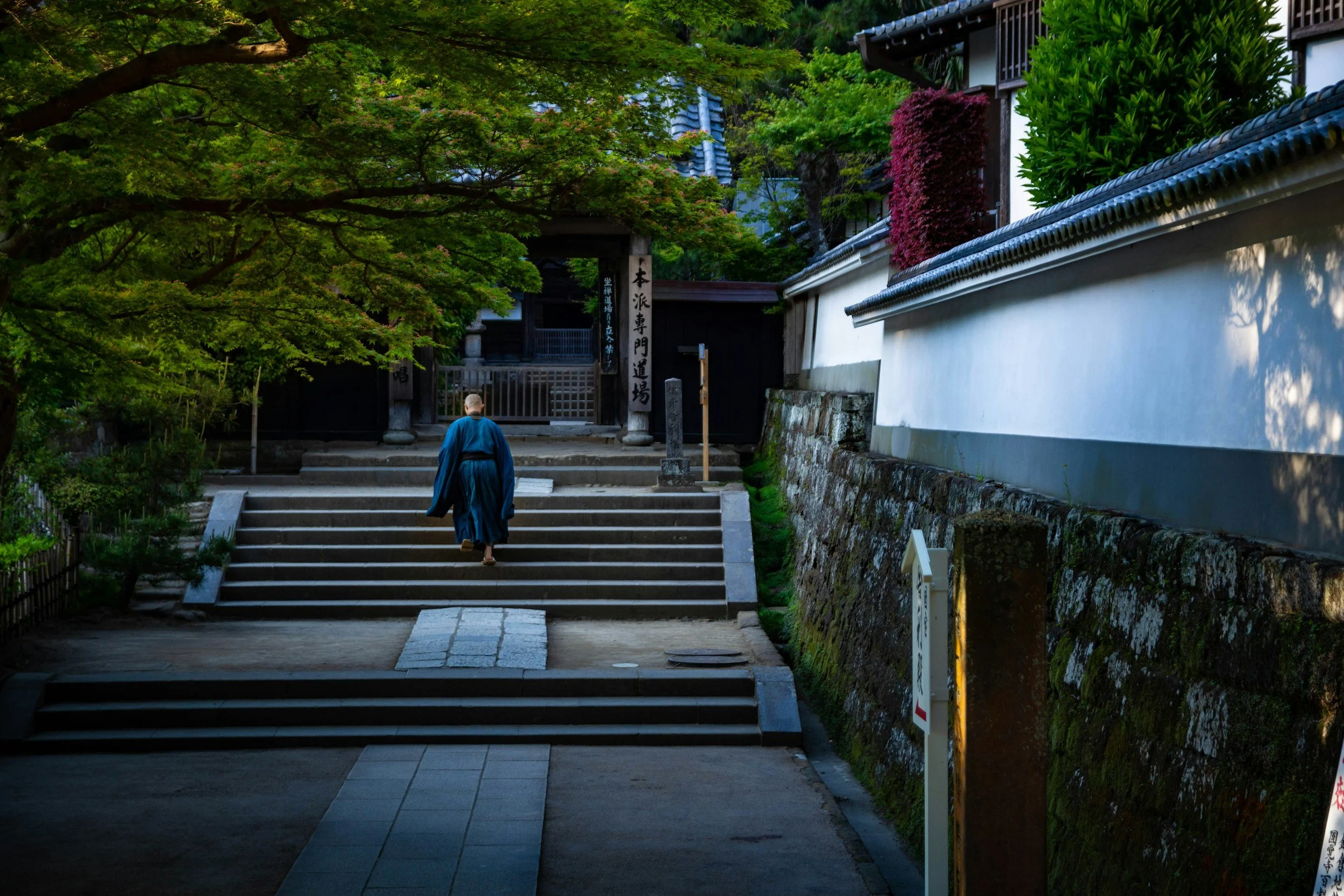
What Locals Taught Me in Japan is a vivid, heartfelt reflection on cultural immersion, drawn from a year living in Kyoto and subsequent travels through Japan. This piece showcases my ability to pair emotive, place-based storytelling with cultural nuance and local connection, offering readers not just a guide to Japan—but an invitation into its quiet generosity. Blending humor, humility, and poetic detail, it exemplifies the kind of personal travel essay that resonates with thoughtful, globally minded audiences.
What Locals Taught Me in Japan
How Kindness, Curiosity, and a Little Language Can Unlock an Entire World
Japan is often described as a land of contrasts, and honestly, that might be the understatement of the century. One moment, you’re gliding silently through a Zen garden as maple leaves fall like origami secrets. The next, you’re shoulder-to-shoulder in a standing bar tucked behind a pachinko parlor, sipping umeshu (Japanese plum wine) while someone belts out Bohemian Rhapsody in full suit and tie.
For me, Japan isn’t just a travel destination. It feels like a home for my spirit. I studied abroad in Kyoto during my undergraduate years, and the experience etched itself into my soul like the indigo dye of a woodblock print. Over time, I learned that the true magic of Japan isn’t in the temples or the Michelin stars — it’s in what locals are willing to show you when you lead with humility, curiosity, and the courage to fumble through their complex language.
Thanks to being friendly, curious, and making local friends, I discovered a Kyoto beneath the postcard. While my days were filled with university lectures and temple visits, my evenings became an immersion in the wild, whimsical juxtaposition that is Japanese nightlife. I was taken to places that each seemed to perfect a single thing — an extension of Japan’s shokunin spirit, where mastery is everything. Hidden mochi-and-matcha shops. An omurice spot with only three stools and a line around the block. And a no-name bar halfway up a residential staircase, where the owner offered me his signature cocktail.
“If you’re not offended by the name,” he said with a grin, “I make this for all my friends.”
He called it Aho Aho — Kansai slang for “stupid stupid” — a deceptively smooth grapefruit concoction that masked the booze so well it had a reputation for getting his regulars joyfully wrecked.
Then there was the underground nightclub tucked into an abandoned subway station, where live artists splashed paint across massive canvases while Jesus-haired rock musicians shredded through a haze of sweat and feedback. It felt more Berlin than Kyoto — until I caught the sea of sleek black hair around me and remembered, sharply, that I was the only foreigner in the room, golden hair and all.
Kyoto: The City That Knelt Me Into Reverence
Kyoto has my heart. It always will. It’s where I spent a year wrapped in both mystery and warmth. At first glance, it feels like the Japan of travel posters — paper lanterns swaying in Gion’s alleys, geisha silhouettes slipping through twilight, temple bells echoing through pine-scented air. But if you live there, even for a while, you start to see the layers.
During a sunrise Pure Land chant of the Heart Sutra at Chion-in Temple, I sat among locals in the seiza kneel — my legs burning but my spirit curious. The physical discomfort was real, but so was the connection I felt by sharing a tradition not my own. It was this willingness to embrace unfamiliar customs that opened doors and shaped my experience in Kyoto, teaching me that the richest lessons often come from stepping beyond comfort zones.
Because I tried — asking questions in slow, clumsy Japanese, listening, laughing at my own mistakes — I was invited in. Welcomed. I shared home-cooked meals in countryside kitchens, last-minute invites to full moon temple events, and memories that will outlast my ability to conjugate itadakimasu.
This was my Kyoto: a city not only of temples and tea but of unexpected jazz bars and underground art clubs — a place where I learned that what you gain isn’t just from books, but from those generous enough to let you step into their world with a friendly smile and some crafty local phrases.
Tokyo: Where Robots Bow and Strangers Laugh
In Tokyo, the rhythm shifts — fast, neon-lit, and impeccably precise. But beneath the city’s futuristic pulse, one truth remains: locals open up when you do.
Most visitors stick to Shibuya’s famous scramble and Harajuku’s colorful streets. I chose to wander off the beaten path, striking up conversations in tiny corner izakayas, ordering whatever my neighbors recommended. If you can say,
“Nihongo wa mada jozu janai kedo, ganbatteimasu!”
(“My Japanese isn’t very good yet, but I’m trying!”)
...you’ll be surprised how quickly formality melts into laughter and genuine curiosity.
One evening, an older woman at a humble noodle shop patiently taught me how to properly slurp soba — the way to show appreciation and respect for the craft. Another time, a man invited me to his brother’s yakitori restaurant, where I found myself at a table full of strangers sipping my first whisky highball.
“You’re not a tourist,” they told me. “You’re trying. That’s what counts.”
Trying — that’s it. Not perfection. Not fluency. Just honest effort and a friendly smile.
The famed Tsukiji fish market is a whirlwind of color and sound, but the real treasure isn’t the bustling auction — it’s the stories hidden within. By chatting with a few vendors, I was swept into tales of life at sea and old family traditions. Their recommendations led me to tiny, tucked-away restaurants where I tasted the freshest sushi, far from the tourist traps.
Tokyo can feel overwhelming, but when you show humility and curiosity, it transforms. The neon blur becomes a backdrop for shared moments, warm smiles, and unexpected friendships.
The Wild Nights of the Salaryman
Nowhere is Japan’s double-life energy more clear than in the phenomenon of the salaryman. By day: quiet, diligent, suited. By night: letting loose with coworkers on a wild circuit of karaoke, izakayas, and questionable karaoke-dancing hybrids. There’s even a term for it — nomikai — the drinking culture that bonds colleagues over shared inebriation and late-night ramen.
I once got roped into a nomikai after politely asking a small group of salarymen for a drink recommendation in my novice Japanese. Hours later, I was belting ’90s ballads and learning to say “kampai!” with increasingly impeccable form.
But what I remember most vividly from that night was the tie.
You see, after a few rounds of sake, the business suit starts to shed its formality. Salarymen — some of the most impeccably dressed people in the world by day — start to loosen up. The ties come off and, with an air of spontaneous liberation, they transform into headbands.
It was like watching a grown-up version of an office superhero finding his inner child.
These men, once stoic and buttoned-up, were suddenly free, smiling, singing, and waving their ties like battle flags in the air.
The boundaries are strict in Japan, but so is the generosity when you’re pulled inside them. The nomikai is more than a cultural rite; it’s an invitation into the joyful freedom of letting your guard down in a safe space, surrounded by newfound friends who, just hours earlier, might have been strangers in suits.
And this spirit of care extends beyond just the parties.
After a night out, it wasn’t uncommon to see someone overindulging — perhaps snoozing in a booth at the bar or napping on a train. But what stood out most was how strangers, even while tipsy themselves, always checked in on each other.
I witnessed countless times how a person stumbling out of a konbini (convenience store) would pick up a bottle of water, walk over to someone passed out on a bench, and gently place it beside them with a kind gesture that said, “Rest easy, you’re not alone here.”
In Japan, safety and thoughtfulness seem to extend even to those moments when people let their guard down completely — and that is something I think a lot of the world could use more of.
A Few Key Phrases to Get You Started
Learning a few key phrases in Japanese doesn’t just help you get around — it helps you get closer to the culture. The language might be tricky, but it’s the effort that counts. I’ve had so much fun learning new phrases, perfecting my pronunciation, and having the most random, but meaningful, conversations with strangers who eventually became friends.
Here are some simple phrases that will get you started — and who knows, they might just make your trip a little more magical:
“Nihongo wa mada heta desu ga, ganbatteimasu!” (日本語はまだ下手ですが、頑張っています!)
“My Japanese is still bad, but I’m trying!”
→ This one always broke the ice and made people smile. Locals love the effort, and often, they'll cheer you on.“Arigatou gozaimasu” (ありがとうございます)
“Thank you very much”
→ Whether you’re accepting a compliment or receiving something at a shop, this never goes out of style. A warm “arigatou” can turn a polite moment into a genuine one.“Sumimasen” (すみません)
“Excuse me” / “Sorry”
→ Incredibly versatile. Use it when asking for help, making a request, or even as a soft “pardon me” in crowded spaces. It’s polite, and it opens doors.“Oishii!” (美味しい)
“Delicious!”
→ Say this after a meal, and watch eyes light up. Compliments to the chef go a long way — even if it’s a street vendor or a friend’s mom.“Kampai!” (乾杯)
“Cheers!”
→ The essential nomikai phrase. Say it with heart, raise your glass, and you’re part of the crew.“Doko desu ka?” (どこですか?)
“Where is it?”
→ This phrase helped me stumble upon hidden gems I never would’ve found otherwise. Ask a local, and you might just get directions and a story.“Daijoubu desu ka?” (大丈夫ですか?)
“Are you okay?”
→ Simple. Kind. Human. Whether someone drops something, looks lost, or just seems off — this phrase shows you care.
🌸 The beauty of learning a few phrases isn’t just about the words — it’s about the connections you build when you try.
What the Locals Really Taught Me
I came to Japan to study culture. I left having lived it. And here’s what the locals taught me — lessons that transcend geography and language:
Kindness gets you everywhere. Bow. Thank people. Show up with grace.
Curiosity is the currency of connection. Ask why, not just how.
Language isn’t a barrier — it’s a bridge. You don’t need to be fluent. Just fearless. And maybe a little funny.
You can read a hundred travel guides and never find the places I went. But if you walk with reverence, ask with sincerity, and laugh at yourself when you inevitably bungle arigatou gozaimasu, Japan will open its quiet, surprising, generous heart to you.
Trust me.
I’ve been there.
And I’m still learning how to say thank you properly.